
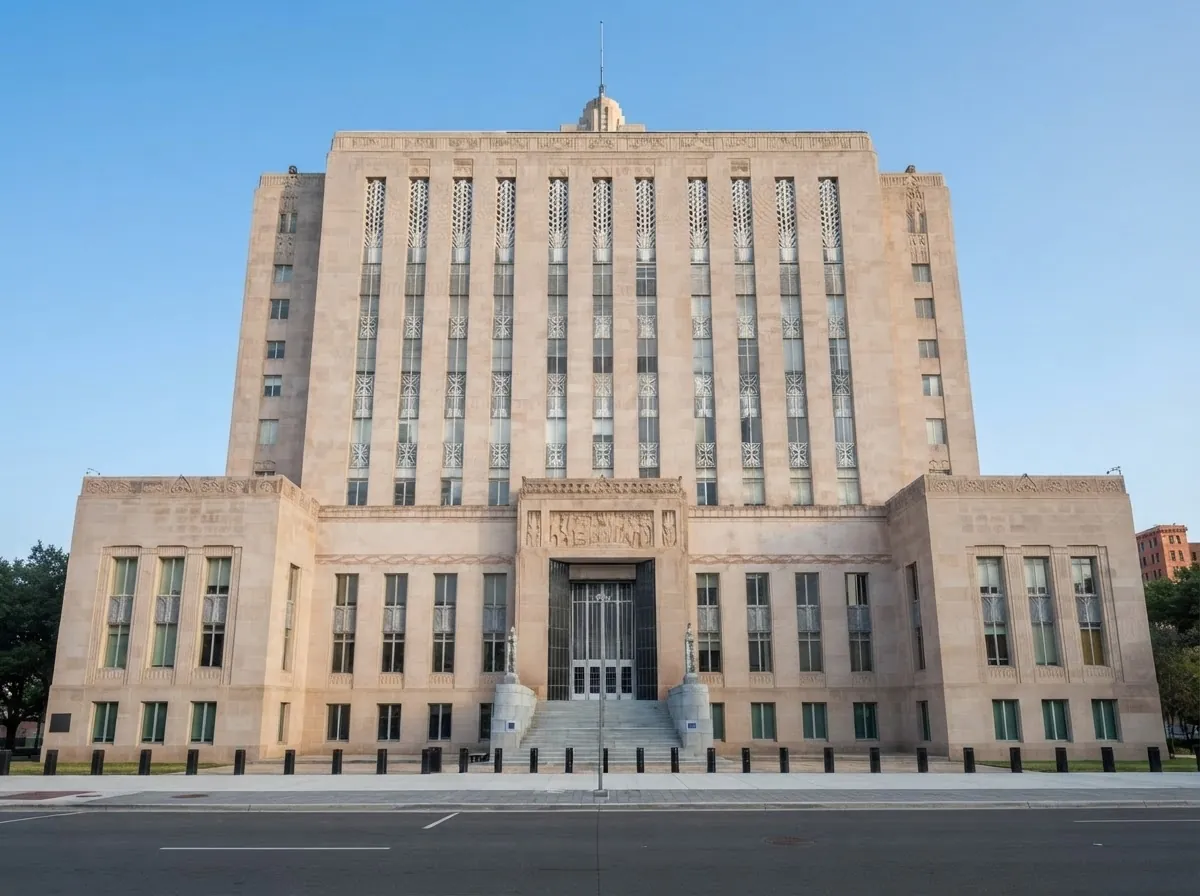
Court records in Oklahoma County are maintained by the county court clerk and are accessible through online tools, official court portals, and directly at the clerk's office. OklahomaCourt.us will help you find publicly available information about court records in this county. Additionally, you can use the Oklahoma County Court Clerk's office, state portals, and federal databases to obtain the necessary documents.
Oklahoma Court System Overview
Oklahoma County is part of the 7th judicial district of the state of Oklahoma. The District Court is a court of general jurisdiction and handles criminal, civil, family, probate, and juvenile cases. Within this court, there is also a magistrate division that deals with less serious cases — small claims, traffic violations, and preliminary hearings in criminal proceedings.
Oklahoma County is the most populous county in the state, so its court processes significantly more cases than any other district court. The main courthouse is located in downtown Oklahoma City.
Courts Serving Oklahoma
Residents of Oklahoma County are served by several courts of different levels of jurisdiction.
State District Court
Federal District Court
Oklahoma County belongs to the Western District of Oklahoma (U.S. District Court for the Western District of Oklahoma).
Municipal Courts
Municipal courts operate within the county, including:
- Oklahoma City Municipal Court — handles city violations and fines. Citations can be checked through Oklahoma City Ticket Lookup.
- Edmond Municipal Court — serves residents of the city of Edmond within the county.
What Types of Cases Oklahoma Courts Hear
Oklahoma County courts hear a wide range of cases. Here are the main categories:
- Felonies and misdemeanors
- Minor offenses and traffic violations
- Civil lawsuits of various scales, including small claims
- Family law — divorce, custody, alimony
- Probate cases, guardianship, conservatorship
- Juvenile proceedings and child protection cases
- Adoption
District Court Cases in Oklahoma
The Oklahoma County District Court is a court of general jurisdiction. It handles serious criminal cases after a preliminary hearing in the magistrate division, as well as civil lawsuits that exceed the jurisdictional limit of the magistrate. Appeals from magistrate judges' decisions are also heard here.
Cases are assigned to judges automatically. The presiding judge conducts the proceedings from start to verdict or decision. Due to the high volume of cases, some judges specialize in certain categories — for example, criminal or family matters.
Magistrate Court Cases in Oklahoma
The magistrate division of the district court handles cases that do not require a full court trial at the District Court level. These include misdemeanors, preliminary hearings in felony cases, traffic violations, and DUI cases.
Civil lawsuits up to $10,000 are heard by magistrates. Small claims are limited to $10,000 according to state law. Magistrates also conduct arraignments — the first court appearance of the accused. Due to the significant workload, some magistrates in Oklahoma County primarily deal with traffic cases or DUI.
Family Law, Probate, and Juvenile Matters in Oklahoma
Family Law
Divorce, child custody, alimony, protective orders, paternity establishment, and termination of parental rights are all handled by the district court. In divorce and custody cases, documents are filed with the Oklahoma County Court Clerk. The court clerk issues copies of marriage and divorce certificates registered in this county.
Probate Cases
Inheritance, guardianship of incapacitated persons, and conservatorship are handled in the district court. A petition to open a probate case can be filed through the clerk's office.
Juvenile Cases
Cases under the Juvenile Justice Reform Act and Child Protective Act are handled by a separate division. Juvenile case records are confidential under Oklahoma law — access to them is restricted.
How Cases Move Through the Oklahoma Court System
- Filing a lawsuit or complaint. A criminal case begins with a criminal complaint or indictment. A civil case begins with a petition.
- Assignment of a judge. The case is automatically assigned to a specific judge.
- First hearing. In criminal cases — arraignment, where charges are announced to the accused. In civil cases — scheduling conference to determine the schedule.
- Pretrial phase. Motions are filed, evidence is exchanged, and plea or settlement negotiations are conducted.
- Trial or resolution. The case concludes with a verdict, settlement, default judgment, or plea.
- Post-decision. The convicted person is sentenced, parties may appeal, and the decision is enforced.
Court Administration, Local Rules, and Public Access in Oklahoma
The administrative judge of the 7th judicial district is responsible for organizing the work of the courts in Oklahoma County. The court administrator coordinates the daily activities of the office and ensures compliance with procedural requirements.
Local court rules for this district are published on the Oklahoma Supreme Court website and are available at the clerk's office. According to the Oklahoma Open Records Act, most court records are public, except for juvenile cases, adoptions, certain family cases, and records sealed by court order.
Hearings are usually open to the public. They can be attended in person at the courthouse. Some hearings may be held remotely — check with the clerk's office to see if this option is available for a specific case.
Court Records and Related Court Resources in Oklahoma
- Court case search. The state of Oklahoma provides online access to court records through the OSCN (Oklahoma State Courts Network) system at oscn.net. There you can find information about Oklahoma County District Court cases.
- Court clerk's office. Court Clerk Rick Warren is responsible for storing and issuing court records. Requests for document copies can be submitted in person or by mail.
- County Clerk's office. County Clerk maintains records of real estate, UCC documents, and other public records of the county.
- Inmate search. Oklahoma Department of Corrections Offender Lookup allows you to check the status of a convicted person in state correctional facilities. For information about detainees in the local jail, use Jail Tracker & Scheduler.
- Arrest warrant search. Oklahoma County Sheriff's Office publishes a list of individuals with active warrants.
- Criminal history. Oklahoma State Bureau of Investigation (OSBI) is the central repository of fingerprints and criminal records in the state.
- Birth and death certificates. These are issued by the Office of Vital Records at the Oklahoma Department of Health.
- Property tax. Oklahoma County Assessor provides information on property assessment and search. General ad valorem tax rules are described on the Oklahoma Tax Commission website.
- Sex offender registry. The state maintains a public registry through the Oklahoma Department of Corrections — search is available on the Offender Info page.